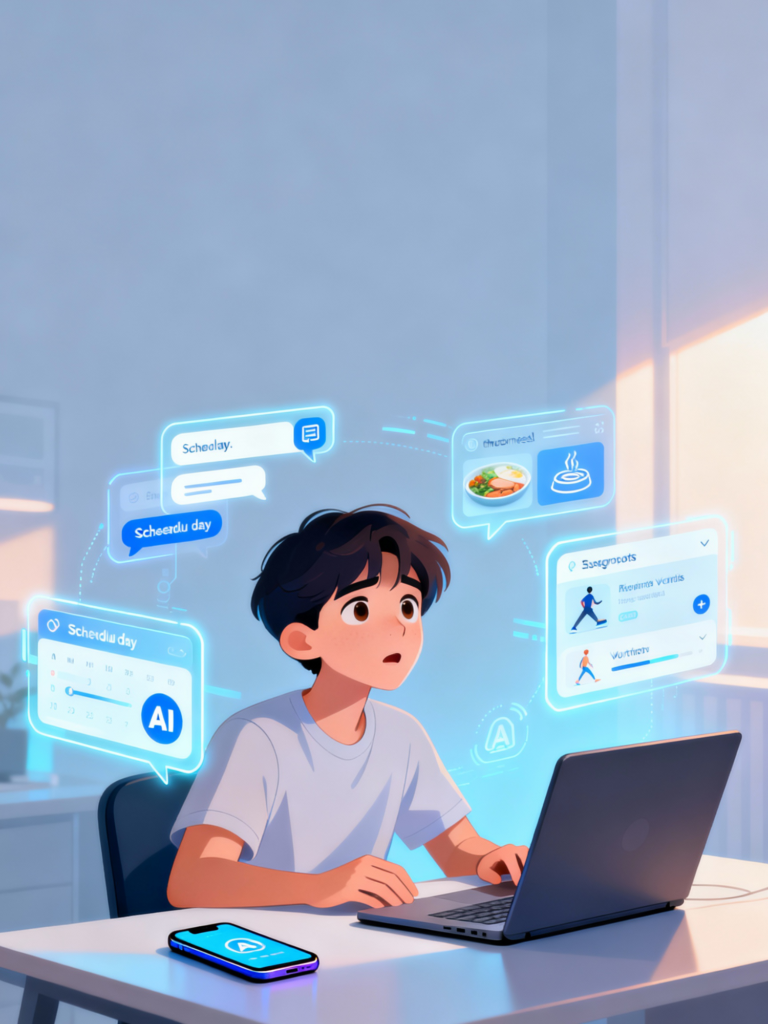
Everyone talks about artificial intelligence as if it is either going to save the world or destroy it. Yet most people still use it only to ask random questions or generate a funny image. The idea of actually letting AI run parts of a normal human life still feels extreme, maybe even a little dangerous. That curiosity is exactly why this experiment happened: for seven days, AI was in charge of my schedule, my meals, my workouts, and even some social decisions. What follows is what worked, what felt deeply uncomfortable, and what this experiment revealed about both AI and human nature.
This is not a technical guide and it is not sponsored by any tool. Think of it as a reality show in written form: a week-long experiment where a human voluntarily takes orders from algorithms and then reflects on the results. If you have ever wondered whether AI could actually make your life better—or ruin your routine completely—this story is for you.
The Rules of the Experiment
Before the experiment started, a few ground rules were necessary. Without rules, it would just turn into aimless playing with prompts. The first rule was clear: AI would decide the “what,” but the human would still control the “if it’s safe.” That meant no actions that were illegal, obviously harmful, or financially reckless. AI could suggest waking up at 4 a.m.; it could not suggest investing life savings in a meme coin.
The second rule was that every core area of life had to be influenced by AI in some way. That included wake-up time, daily schedule, to‑do list prioritization, meals, exercise, and learning activities. When in doubt, AI would choose. If there were three tasks to do, AI decided which one happened first. If it was dinner time, AI suggested what to cook or order, and the suggestion had to be followed unless there was a serious reason not to.
The third rule was transparency: a journal would be kept for the entire week, documenting what AI suggested, how it felt to follow those suggestions, and what the outcomes were. The idea was not only to test whether AI could optimize life, but also to see the emotional impact of outsourcing everyday decisions to a machine.
Day 1: Realizing How Many Decisions We Make
The first surprise came before breakfast. As soon as the experiment began, everyday life suddenly felt like a never-ending list of micro‑questions. What time should I wake up tomorrow? What tasks should I tackle first? What should I eat? How long should I work before taking a break? Normally, these decisions happen automatically, without much conscious thought. But when every choice has to be routed through AI, you notice just how many decisions shape a day.
AI’s first big decision was the schedule. It generated a structured plan starting at a specific time in the morning, with fixed blocks for deep work, breaks, exercise, and relaxation. It gave each block a clear purpose and even suggested what to focus on in each. The schedule felt more like what a disciplined productivity coach would design than something a tired human would willingly create for a Monday.
Following this schedule was harder than it looked. The early hours of the day went surprisingly well. Starting with a defined plan removed that usual “What should I do first?” hesitation. Work began faster, and the mind settled into tasks more easily because there was a sense that “this is already decided.” But by late afternoon, friction started to appear. The AI‑generated plan did not care whether energy levels had dropped or whether motivation had disappeared. It simply rang a mental bell: “Now it is time for the next block.”
That clash—between a machine’s clean logic and a human’s messy mood—became a recurring theme throughout the week.
Day 2: Food, Cravings, and AI Meal Planning
On the second day, the focus shifted to food. Instead of deciding what to eat based on cravings or convenience, the decision was handed over to AI. The instructions given were simple: design meal plans that are relatively healthy, budget‑friendly, and realistic for someone with limited time to cook. With that context, AI produced a full day of meals and snacks, along with suggested times.
One interesting thing happened almost immediately: the emotional relationship with food became obvious. When AI suggested a simple, balanced breakfast instead of something sugary, there was a subtle feeling of disappointment, almost like a child being told to eat vegetables. It was a reminder that food decisions are rarely about pure logic. They carry comfort, habit, and even self‑reward.
Yet following the AI‑made meal plan brought unexpected benefits. There was less mental noise around food. No more scrolling through delivery apps, no more standing in front of the fridge wondering what to cook. The decision was already made, and sticking to it felt oddly liberating. Energy levels were more stable throughout the day, and there were fewer sudden crashes caused by impulsive snacking.
Of course, AI’s suggestions were not perfect. Sometimes the meals were too repetitive. Sometimes they assumed ingredients that were not available. But even with imperfections, the general pattern was better than the usual spontaneous, mood‑based eating. It showed that even a slightly optimized plan beats a chaotic one most of the time.
Day 3: AI as a Time Manager
By the third day, the experiment started to reveal its real strength: time management. Instead of feeding AI vague questions, the prompts became more specific. A list of tasks for the day would be provided, along with rough estimates of how long each would take and how urgent they were. The question then became: “Organize these into a realistic schedule and tell me what to do now.”
What came back was often a well-structured plan that balanced focused work, shallow tasks, and breaks. The algorithm prioritized tasks that were both important and time‑sensitive, pushing them toward earlier parts of the day. It suggested breaking big tasks into smaller steps, which made them less intimidating. It even sometimes placed short “buffer blocks” between heavy tasks to avoid burnout.
Following these AI‑curated schedules had a few clear effects. First, productivity increased simply because there was less procrastination. When the next action is written out for you, it becomes harder to justify doing something else. Second, there was a sense of accountability—almost like reporting to a calm, data‑driven manager who always expects you to be on the next item.
However, there was a downside too. The rigid structure left little room for spontaneous creativity or unplanned deep thinking. If an interesting idea arose in the middle of a task, the schedule did not naturally allow time to explore it. That kind of free‑flow thinking is hard to optimize with a strict timetable, and AI, at least in this context, did not fully account for it.
Day 4: Exercise, Motivation, and AI Coaching
On day four, AI took control over exercise. The instruction was to design daily workouts that required no special equipment and could be done at home, while matching a moderate fitness level. The result was a set of clear routines with warm‑ups, main exercises, and short cool‑downs.
The interesting part was not the structure of the workouts but the psychological effect. Left alone, many people either overestimate what they can do and burn out quickly, or underestimate and do almost nothing. AI’s suggestions sat in a surprisingly reasonable middle ground: not extreme enough to be overwhelming, but not so light that they felt pointless.
The real challenge was consistency. AI can tell you to exercise at a certain time, but it cannot physically drag you off the couch. On some days, the reminder to work out came at awkward times, like when focus was high on a task or when mental fatigue was already strong. Following the instructions required a level of discipline that no tool can automate.
Still, completing the routines brought a predictable reward: better mood, less mental fog, and a feeling of accomplishment. Over time, it became clear that the actual value was not in the perfect choice of exercises but in having a default plan. When you know that “today’s workout” is already designed, the barrier to starting becomes lower.
Day 5: Social Life and Awkward AI Decisions
By day five, the experiment turned toward a more sensitive area: social interactions. AI was not allowed to send messages directly or interact with people, of course, but it was allowed to suggest when to reach out to friends, which messages to answer first, and whether to accept or decline certain invitations based on the week’s priorities.
This was where things started to feel uncomfortable. Social life is not a spreadsheet, and asking a machine to weigh the importance of relationships is strangely unsettling. Yet at a practical level, AI was surprisingly useful for simple things like drafting polite replies, suggesting conversation starters, or reminding to check in on someone who had not been contacted in a while.
At the same time, some recommendations felt tone‑deaf. AI might suggest turning down a spontaneous meet‑up because it clashed with a work block, without understanding that rare opportunities to connect in person can matter more than another hour behind a screen. It became obvious that while AI could assist with wording and timing, it could not fully grasp emotional nuance or long‑term relational context.
This raised a deeper question: just because a decision is rational on paper, does that make it the right one? The answer, at least when it comes to relationships, is often no. Human connections are built on flexibility, empathy, and sometimes even irrational choices, like staying up late to talk despite having an early morning.
Day 6: Emotional Impact of Outsourcing Control
By the sixth day, the most surprising part of the experiment was not about efficiency or health; it was about emotions. There is a strange relief in letting a system decide your day. Decision fatigue drops, and a sense of order replaces the usual mental clutter. But there is also a subtle, growing discomfort: a feeling of being managed rather than choosing.
On some level, humans want both freedom and structure. AI is extremely good at providing structure: routines, schedules, reminders, plans. The problem is that structure without a sense of ownership can start to feel like a cage, even if it is a comfortable one. When every decision is outsourced, a quiet question appears: “Whose life am I really living?”
Another emotional effect was the way success and failure felt different. Finishing a productive AI‑designed day led to a sense of mutual effort: the machine provided the plan, the human provided the execution. But when the plan was ignored or broken, it felt less like an ordinary lazy day and more like a promise broken—to a system that never gets tired, never loses focus, and never doubts.
This contrast highlighted a key point: AI can amplify both your discipline and your guilt, depending on how you use it.
Day 7: What AI Is Good At—and What It Is Not
The final day was less about new experiments and more about observing patterns. After a week, a few strengths of letting AI run life became clear. It is excellent at turning vague intentions into concrete plans. It reduces the friction of getting started. It nudges you toward more consistent habits around food, exercise, work, and learning. It makes boring, repetitive decisions easier and faster.
But its limitations are equally clear. AI does not understand your full emotional landscape, your deeper values, or the unspoken context behind your choices. It does not know, in a real human sense, that a quiet walk with a close friend might be more important than hitting a productivity target. It cannot feel when you are on the edge of burnout or when inspiration suddenly strikes and a carefully constructed schedule should be thrown out.
The week also showed that AI is only as good as the instructions it receives. Vague prompts lead to generic, unhelpful advice. Clear constraints and honest self‑descriptions produce far better suggestions. In other words, using AI well still requires self‑awareness and responsibility.
Biggest Lessons from the Week
After seven days of letting AI shape almost everything, a few key lessons stand out.
First, AI makes a powerful assistant but a poor master. When used as a tool to support your decisions, it can remove friction and improve consistency. When treated as the ultimate authority, it starts to clash with your humanity—your moods, values, and relationships.
Second, the real benefit is not perfection but reduction of chaos. A simple, slightly imperfect plan generated in seconds often beats the half‑hour of overthinking that happens when you try to decide everything yourself. That is especially true for routines like meals, exercise, and daily schedules.
Third, the future is not about humans versus machines but humans plus machines. The most effective pattern that emerged during the week was collaboration: letting AI propose a structure and then adjusting it with personal judgment. The best days were neither fully automated nor fully unplanned; they were co‑created.
If you ever decide to try a similar experiment, start small. Let AI plan your meals for a day, or design your schedule for a morning, or create a weekly workout plan. Notice how it feels to follow instructions from something that never gets tired or distracted. Then, most importantly, notice where you instinctively want to say no. That tension is where you will learn the most about both AI—and yourself.