The United States of America is widely regarded as the most powerful military force in modern history. Its strength lies not only in the size of its armed forces but also in advanced technology, global military bases, economic power, and alliances such as NATO. As of 2026, the United States ranks #1 in global military power, ahead of major rivals like China and Russia.
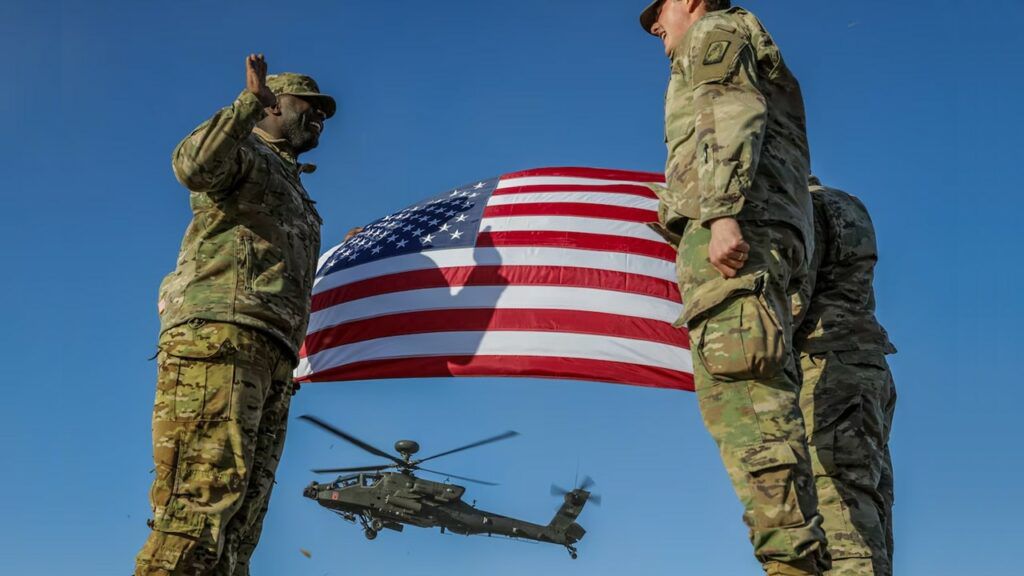
This article explores how powerful the United States truly is, listing its major military assets and comparing them with other major powers. We will also examine what the U.S. military can actually do in a conflict scenario.
1. The Foundations of U.S. Military Power
The power of the United States military rests on five pillars:
- Massive defense spending
- Technological superiority
- Global military presence
- Nuclear deterrence
- Power projection capability
The U.S. Department of Defense budget for 2026 is about $892–895 billion, which is larger than the military spending of the next several countries combined.
This enormous budget allows the U.S. to maintain:
- Over 2.1 million military personnel
- Hundreds of overseas bases
- The world’s largest fleet of stealth aircraft
- The most powerful navy ever built
The combination of money, technology, and logistics allows the U.S. to conduct operations anywhere in the world.
2. Personnel and Military Organization
The U.S. Armed Forces consist of six branches:
- Army
- Navy
- Air Force
- Marine Corps
- Space Force
- Coast Guard
Personnel
Approximate strength: Category Numbers Active personnel ~1.3 million Reserve personnel ~800,000 Total military manpower ~2.1 million
This makes it one of the largest professional militaries on Earth.
Comparison with Other Powers
Country Active Personnel China ~2 million United States ~1.3 million India ~1.4 million Russia ~1 million
China has more soldiers, but the U.S. spends far more per soldier, giving it technological superiority.
3. U.S. Defense Budget vs Rivals
Military spending is a key indicator of power. Country Defense Budget United States ~$895 billion China ~$300 billion Russia ~$110 billion India ~$81 billion
The U.S. spends more than the next 10 countries combined on defense.
This allows America to maintain:
- cutting-edge aircraft
- advanced satellites
- AI warfare systems
- massive logistics infrastructure
4. The U.S. Navy – The Most Powerful Navy in History
The U.S. Navy is considered the strongest naval force ever built.
Key Assets
- 11 nuclear-powered aircraft carriers
- 70+ submarines
- dozens of destroyers, cruisers, and amphibious ships
Aircraft Carriers
The United States operates 11 aircraft carriers, the largest number of any country.
Each carrier is essentially a floating military base capable of launching dozens of aircraft.
Comparison with Other Countries
Country Aircraft Carriers United States 11 China 3 UK 2 India 2 Russia 1
This means the U.S. can deploy multiple carrier strike groups simultaneously around the world.
5. U.S. Air Force – The World’s Most Advanced Air Power
The United States Air Force is the largest and most technologically advanced air force on Earth.
Key Assets
Approximate numbers:
- 13,000+ military aircraft
- stealth fighters (F-22, F-35)
- strategic bombers (B-2, B-52)
- advanced drones
The U.S. also operates the largest stealth aircraft fleet in the world.
Major Aircraft
Examples include:
- F-22 Raptor
- F-35 Lightning II
- B-2 Spirit stealth bomber
- B-52 Stratofortress
Comparison with China and Russia
Country Total Aircraft United States ~13,000 Russia ~4,200 China ~3,300
This means the U.S. has over three times more aircraft than its rivals.
6. U.S. Army – Land Warfare Capability
The U.S. Army is one of the most capable land forces in the world.
Key Assets
- ~4,640 tanks
- thousands of armored vehicles
- advanced artillery systems
The U.S. also operates the famous M1A2 Abrams main battle tank.
Armored Vehicles
- Stryker
- Bradley IFV
- MRAP vehicles
Comparison with Russia and China
Country Tanks Russia 12,000+ United States ~4,600 China ~5,000
Russia has more tanks, but many are older Soviet models.
U.S. tanks are considered among the most advanced and survivable.
7. Nuclear Arsenal
The United States possesses one of the largest nuclear arsenals in the world.
Nuclear Warheads
Approximate numbers:
- ~5,244 nuclear warheads in total inventory
However, Russia has a slightly larger stockpile.
Nuclear Weapons Comparison
Country Nuclear Warheads Russia ~5,500+ United States ~5,200 China ~600 France ~290
Russia leads in numbers, but the U.S. maintains an extremely advanced nuclear triad.
8. The Nuclear Triad
The United States operates a three-part nuclear deterrent:
- ICBMs (land-based missiles)
- Submarine-launched missiles
- Strategic bombers
This ensures the ability to retaliate even after a nuclear attack.
Components
Land-based missiles
- Minuteman III ICBMs
Submarine-based missiles
- Trident II missiles on Ohio-class submarines
Air-based nuclear weapons
- B-2 and B-52 bombers
This system guarantees second-strike capability, making nuclear war extremely risky for enemies.
9. Space Warfare – The U.S. Space Force
The United States is the only country with a dedicated Space Force branch.
Its responsibilities include:
- military satellites
- missile warning systems
- space surveillance
- anti-satellite defense
Satellites allow the U.S. military to:
- track enemy forces
- guide missiles
- coordinate troops worldwide
Space capability gives the U.S. a massive strategic advantage.
10. Cyber Warfare Capabilities
Another powerful dimension of U.S. military strength is cyber warfare.
The United States operates:
- U.S. Cyber Command
- advanced cyber defense systems
- offensive hacking capabilities
Cyber warfare can:
- shut down enemy power grids
- disable banking systems
- disrupt military communications
This type of warfare is becoming increasingly important.
11. Global Military Bases
One of the biggest advantages of the United States is its global network of bases.
The U.S. maintains 750+ overseas military bases across the world.
Major regions include:
- Europe
- Japan
- South Korea
- Middle East
- Pacific islands
These bases allow the U.S. to deploy forces quickly anywhere on Earth.
No other country has this level of global presence.
12. Military Alliances
The United States is not alone.
It leads powerful alliances including:
- NATO
- AUKUS
- Five Eyes intelligence alliance
NATO alone includes over 30 countries.
This means an enemy fighting the United States may face a coalition of dozens of nations.
13. Technological Superiority
Another major factor is technology.
The United States leads in:
- stealth aircraft
- drones
- satellite warfare
- AI military systems
- missile defense
Examples include:
- F-35 stealth fighter
- MQ-9 Reaper drones
- hypersonic missile programs
These technologies provide a qualitative advantage, not just numerical strength.
14. Logistics and Supply Power
Wars are not won only with weapons.
They require:
- fuel
- ammunition
- food
- medical support
- transportation
The U.S. military operates the largest logistics network in the world.
For example:
- massive cargo aircraft fleet
- military sealift ships
- global supply chains
This allows the United States to fight wars thousands of kilometers away from home.
15. What the United States Military Can Do
Because of its capabilities, the United States can perform operations that very few nations can match.
Rapid Global Deployment
The U.S. can deploy:
- aircraft carriers
- airborne troops
- Marines
within days anywhere in the world.
Large-Scale Warfare
The U.S. military can fight multiple wars simultaneously.
Precision Strike Capability
With cruise missiles and stealth bombers, the U.S. can strike targets with extreme precision.
Power Projection
Carrier strike groups allow the U.S. to project military power without needing land bases.
16. Limitations of U.S. Power
Despite its strength, the United States is not invincible.
Challenges include:
Rising China
China is rapidly expanding its navy and military technology.
Its fleet may surpass the U.S. in size by the 2030s.
Nuclear Deterrence
Russia still maintains the largest nuclear arsenal, preventing direct conflict between major powers.
Asymmetric Warfare
Smaller groups can challenge powerful militaries using guerrilla tactics.
Examples include wars in Iraq and Afghanistan.
17. Future of U.S. Military Power
The United States is investing in new technologies:
- hypersonic missiles
- AI warfare systems
- autonomous drones
- next-generation fighters
- space weapons
These programs aim to maintain U.S. dominance for decades.
Conclusion
The United States remains the most powerful military force on Earth.
Its strength comes from:
- the largest defense budget
- advanced technology
- global military bases
- powerful navy and air force
- nuclear deterrence
- strong alliances
While rivals like China and Russia are growing stronger, the United States still maintains a significant lead in overall military capability.
In simple terms, the United States possesses the ability to project power anywhere on the planet, making it one of the most influential military forces in history.