Iran — historically known largely to the world as Persia — is one of the most ancient and continuous civilizations on Earth. Its history spans millennia, stretching from prehistoric cultures of the Bronze Age to powerful empires that shaped global geopolitics, and finally to its contemporary role as the Islamic Republic of Iran. It is a land where empire rose and fell, where religions and philosophies interacted, and where the notion of statehood and identity itself has been forged and re-forged through time.
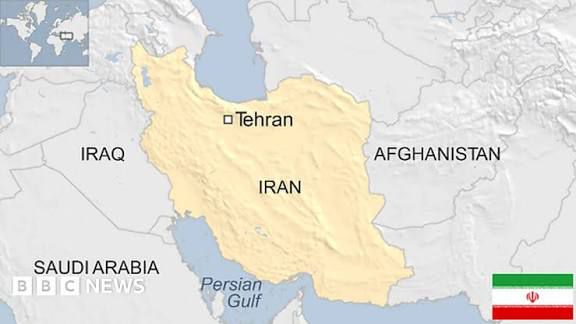
In this comprehensive exploration, we’ll trace Iran’s evolution across epochs: the prehistoric era and early civilizations; the imperial powerhouses of the Medes, Achaemenids, Parthians, and Sasanians; the Islamic conquest and medieval centuries; the rise of modern dynasties; the seismic 20th-century transformations; and the present-day nation navigating a complex regional and global landscape.
The Land Before History: Early Settlements and Civilization (c. 7000–1500 BC)
Long before the name Iran appeared in texts, the land that would become its heart was witnessing human settlement and culture. Archaeological findings across the Iranian Plateau reveal urban life as early as the 5th millennium BC. Sites such as Susa — possibly as old as 4395 BC — point to an early cradle of civilization in southwestern Iran.
The plateau’s fertile valleys, mountain ranges, and river systems nurtured successive prehistoric cultures. Among these were the Jiroft culture in southeastern Iran, whose artefacts and settlement remains speak to an advanced Bronze Age society predating or paralleling Mesopotamian states.
In the western regions, groups such as the Elamites established one of the earliest organized states, centered around Susa. Their kings ruled over a complex society with written records by the early 3rd millennium BC — a testament to the region’s antiquity and its early fusion of language, administration, and culture.
The Rise of the Medes and the Birth of a Nation (c. 728–550 BC)
While the Iranian plateau hosted many early peoples, it was during the Iron Age that an Iranian identity began to coalesce into political unity. The Medes — an Indo-Iranian people — emerged in western and northwestern Iran and, by the 7th century BC, established the first significant Iranian kingdom, unifying local tribes and regions into a central authority.
The importance of the Medes lies not only in their political power but in their role as precursors to later imperial systems. They set the stage for greater unification under their successors and helped define the geographical and cultural core of what would become the Iranian nation.
The Achaemenid Empire: Persia’s Golden Dawn (550–330 BC)
The real global emergence of Iranian power began with Cyrus II, widely known as Cyrus the Great, founder of the Achaemenid Empire around 550 BC. Building on Median foundations, he defeated the Median king Astyages and went on to forge the largest empire the ancient world had seen — stretching from Anatolia and Egypt in the west to Central Asia and the Indus Valley in the east.
The Achaemenid system was revolutionary in its scope and governance. Rather than imposing a uniform culture, it allowed for a degree of local autonomy, maintenanced a network of roads and postal systems, and upheld principles of justice and civilized conduct — famously inscribed on the Cyrus Cylinder. The empire’s cultural and administrative sophistication influenced Greek, Roman, and Near Eastern states alike.
During this period, Persian art, architecture, and governance became hallmarks of empire. Sites like Persepolis — the ceremonial capital — showcase the grandeur of Achaemenid ceremonial life and imperial ideology.
When Empire Meets Empire: Alexander and the Hellenistic World (330–247 BC)
The rise of Alexander the Great brought an abrupt end to the Achaemenid Empire. In 330 BC, he conquered Persepolis and effectively dismantled Persian imperial structures. Yet, rather than eliminating Persian culture, the encounter with Hellenistic society led to new hybrid forms — merging Greek and Iranian traditions across Alexander’s former territories.
This blending of worlds set the stage for the next great Iranian power: the Parthian Empire.
The Parthian Era: A New Persian Order (247 BC–224 AD)
Emerging from the northeastern reaches of the Iranian world, the Parthians — led by Arsaces I — overthrew Seleucid control and established a dynasty that lasted nearly five centuries. At its height, the Parthian Empire extended from the Euphrates to Afghanistan, acting as both a bulwark and bridge between East and West.
Parthian governance was characterized by a federated structure of semi-independent vassal rulers under a central monarch. While less centralized than their Achaemenid ancestors, the Parthians played a crucial role in controlling key trade routes — especially sections of the Silk Road linking China to the Mediterranean.
Culturally, they absorbed and synthesized Hellenistic, Iranian, and local traditions, contributing uniquely to the mosaic that was ancient Iranian civilization.
The Sasanian Empire: Persian Revival and a Golden Age (224–651 AD)
The decline of the Parthians gave way to the Sasanian Empire, a renaissance of centralized Persian power that would become one of the most formidable states of late antiquity. Under dynasts such as Ardashir I and Shapur I, the Sasanians unified the Iranian plateau and expanded into Mesopotamia, the Caucasus, and beyond.
The Sasanian era was a high point for Iranian civilization. It fostered architectural achievements, administrative sophistication, and a renaissance in arts and sciences. Zoroastrianism — the ancient Iranian faith that emphasized cosmic duality and moral order — was institutionalized as the state religion, further unifying the empire culturally and spiritually.
The Sasanians were also pivotal adversaries of the Roman (later Byzantine) Empire, engaging in cycles of war and diplomacy that defined Near Eastern geopolitics for centuries. Their fall in 651 AD came after the Arab Muslim conquests, which reshaped the region’s cultural and religious map.
Islam and the Medieval Iranian World (651–1501 AD)
The Islamic conquests introduced a new era. Though initially politically dominated by Arab caliphates, the Iranian plateau became deeply transformed. Islam spread rapidly and became the region’s dominant religion; yet Persian culture and language did not disappear — they adapted and, in many ways, flourished within the Islamic world.
In the medieval period, Iranian cities such as Baghdad, Nishapur, Rayy, and Isfahan became centers of learning, trade, and scholarship. Persian literature — epitomized by poets like Ferdowsi, Rumi, and Hafez — shaped Islamic literary traditions. Persian administrative models and court culture influenced neighboring realms from Central Asia to India.
During these centuries, the political landscape was fragmented, with various dynasties such as the Buyyids, Ghaznavids, Seljuks, and Mongol successors competing for dominance. But Persian identity — defined by language, customs, and cultural expressions — remained a unifying thread across the region.
The Safavid Renaissance: Shiʿism and National Identity (1501–1736)
The 16th century brought a defining transformation. The Safavid dynasty established a unified Iranian state and, perhaps most importantly, adopted Shiʿite Islam as the official religion. This choice distinguished Iran from its Sunni neighbors and forged a collective religious and national identity still central today.
Under Safavid rule, Persian culture experienced a renaissance in visual arts, architecture, and urban life. Mosques, palaces, and public works showcased an aesthetic rooted in Persian forms and spirituality. The empire’s adoption of Persian language across courts and administration reinforced Iran’s cultural continuity after centuries of foreign influences.
The Safavid era also heightened Iran’s position as a geopolitical power, engaging with the Ottoman Empire to the west and expanding influence eastward. Even after the dynasty’s decline, its institutional legacy — especially the centrality of Shiʿite Islam — remained deeply anchored in Iranian society.
Qajar and Pahlavi Eras: Confronting Modernity (1789–1979)
Following a period of fragmentation after the Safavids, the Qajar dynasty rose in the late 18th century and ruled into the early 20th century. Although monarchic, the Qajar period was marked by internal weakness and foreign encroachment, particularly by British and Russian interests.
This period saw Iran struggle to maintain sovereignty amid the “Great Game” of imperial competition. Internal pressures for reform and constitutional governance culminated in the Persian Constitutional Revolution (1905–1911), which established a parliament and limited monarchy — a watershed moment for Iranian civil politics.
By the 1920s, Reza Pahlavi seized power, founding the Pahlavi dynasty and initiating ambitious modernization and centralization programs. Persia was renamed Iran officially in 1935, reflecting a move toward modern national identity.
Under Reza Shah and his son Mohammad Reza Shah, Iran pursued rapid state modernization, infrastructure projects, and secular reforms. Yet growing authoritarianism, inequality, and Western influence sowed deep discontent.
The 1979 Revolution and the Islamic Republic
The culmination of social, political, and religious tensions erupted in the Iranian Revolution (1978–79). This popular uprising — involving broad swaths of Iranian society — toppled the Pahlavi monarchy on February 11, 1979.
Led by Ayatollah Ruhollah Khomeini, the movement rejected autocracy, Western interference, and secularization, replacing the monarchy with the Islamic Republic of Iran. This new system combined republican elements with clerical oversight, rooted in the principle of Velayat-e faqih (guardianship of the Islamic jurist).
The Islamic Republic ushered in profound changes in law, society, and international relations. Its political structure — balancing elected institutions with religious authority — remains distinctive and continues to be a source of both internal debate and global attention.
Iran in the 21st Century: A Nation Between Tradition and Change
Today, Iran is a nation of deep historical roots and complex contemporary challenges. Its population, language (Persian or Farsi) and culture remain deeply shaped by centuries of indigenous development, Islamic religion, and intellectual heritage.
Internally, Iran continues to navigate the balance between conservative religious governance and pressures for reform and modernization. In recent years, there have been cultural shifts — including renewed engagement with ancient Persian heritage and debates over social freedoms — reflecting an evolving national discourse.
Externally, Iran plays a significant role in regional geopolitics, marked by its relationships with neighboring states, involvement in regional conflicts, and enduring strategic importance due to energy resources and historic cultural influence.
Conclusion: A Tapestry Woven Through Time
The story of Iran is not one of a linear march from past to present but a rich tapestry woven from diverse cultures, dynasties, faiths, and peoples. From early Bronze Age settlements and the unified state of the Medes, through world-defining empires like the Achaemenids, Parthians, and Sasanians, to dynamic medieval Islamic civilizations and modern political revolutions, Iran’s evolution reflects humanity’s broader search for identity, power, faith, and community.
As one of the oldest continuous civilizations, Iran remains a testament to resilience — its past echoing into its present, shaping a nation that continues to captivate scholars, travelers, and the world at large.