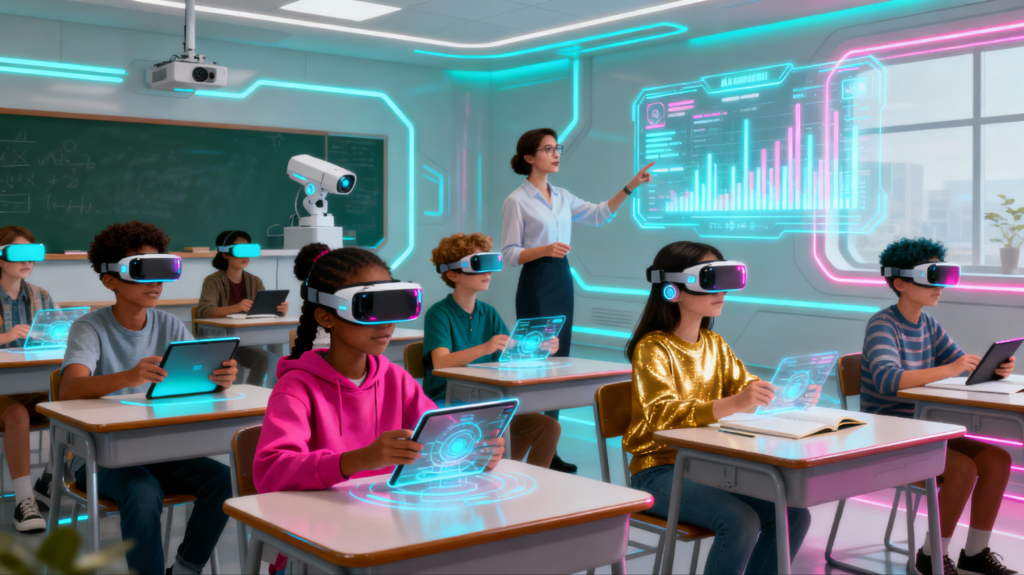
Education is undergoing a profound transformation in 2025. Across the globe, classrooms are evolving beyond the traditional one-size-fits-all model to embrace personalization that matches the pace, style, and needs of individual learners. At the center of this revolution is artificial intelligence (AI), which empowers educators and students alike by curating highly customized learning experiences.
This post dives deeply into how AI-driven personalized learning systems work, their benefits and challenges, real-world applications, and what the future holds for learners and educators worldwide.
What is Personalized Learning and How Does AI Transform It?
Personalized learning tailors educational content and methods to accommodate a learner’s unique abilities, preferences, and progress. Traditional education often struggles to serve diverse learning speeds and styles adequately, leading to disengagement, underperformance, or frustration for many students.
AI transforms personalized learning by using data and algorithms to:
- Analyze individual student strengths, weaknesses, and preferences in real time.
- Adapt lessons dynamically based on student interactions and feedback.
- Provide targeted exercises, resources, and assessments aligned to each learner’s needs.
- Offer continuous, personalized feedback to motivate progress and mastery.
Platforms like Microsoft’s Reading Coach and Squirrel AI exemplify this approach, employing AI to craft personalized curricula, identify areas needing improvement, and even diagnose misconception patterns.
The Benefits of AI-Driven Personalized Learning Systems
1. Improved Engagement and Motivation
Personalization helps students feel understood and supported. When lessons match their interests and learning pace, students engage more deeply and retain information better. AI systems provide interactive and relevant content, translating abstract concepts into digestible, relatable knowledge snippets.
2. Targeted Support to Prevent Learning Gaps
AI can continuously monitor learner progress, flagging difficulties early. Instead of waiting for assessments or end-of-unit exams, teachers can intervene the moment a student struggles, preventing knowledge gaps from widening and boosting long-term academic success.
3. Scalable Individualized Instruction
One of the biggest challenges in education is providing one-on-one attention. AI acts as a supplement by personalizing instruction for every student simultaneously, making individualized learning scalable and accessible, even in crowded classrooms.
4. Data-Driven Insights for Educators
Teachers receive rich analytics on student behavior patterns, allowing them to tailor their methods further and focus their energy where it matters most. Insights from AI help optimize lesson plans, group assignments, and classroom activities.
Real-World Examples of AI Personalized Learning in Action
Numerous educational institutions and platforms demonstrate the growing impact of AI-driven personalized learning:
- Microsoft Reading Coach: An AI-powered tool that assists students in practicing reading aloud. It listens, assesses pronunciation, offers corrections, and adjusts lessons to the learner’s fluency level.
- Squirrel AI: A Chinese adaptive learning platform that creates custom learning paths using AI-driven diagnostics, helping students prepare for competitive exams with tailored content.
- Duolingo: Using AI algorithms to personalize language learning exercises based on the learner’s vocabulary strengths, weaknesses, and common mistakes.
- Knewton: An adaptive learning technology that customizes content pathways in math and science curricula, adjusting difficulty based on student performance in real time.
Challenges and Ethical Considerations
1. Digital Divide and Access Inequity
AI-powered learning assumes internet access and compatible hardware—which remains a barrier for underserved communities or rural areas. Addressing infrastructure inequalities is essential for inclusive education.
2. Data Privacy and Security
AI systems work by collecting sensitive student data such as learning patterns and progress. Ensuring responsible data use, privacy protection, and transparency about AI algorithms is critical.
3. Teacher Roles and Adaptation
There are concerns that AI might dehumanize education or replace teachers. Instead, educators must be empowered and trained to leverage AI as an assistant that enhances—not replaces—their role as mentors, motivators, and facilitators.
4. Algorithmic Bias and Fairness
AI systems must be periodically audited to avoid biases that could disadvantage certain student groups based on language proficiency, ethnicity, or socioeconomic background.
The Student Experience: Voices from the Field
Students report a range of benefits with AI-assisted learning:
- Increased confidence thanks to immediate, personalized feedback.
- Lower anxiety as learning adjusts to their pace without pressure.
- Enjoyment from interactive, gamified content that makes learning feel less like work and more like exploration.
Educators, too, find the systems a powerful supplement that lightens their workload and sharpens insight into student needs.
The Future of AI-Driven Personalized Learning
Experts predict continued integration and sophistication of AI in education:
- Generative AI Tutors: AI capable of conducting natural conversations, answering questions, and simulating one-on-one tutoring sessions.
- Multimodal Learning: Combining AI analysis of speech, writing, gestures, and emotional cues to adapt teaching approaches dynamically.
- Seamless Integration Across Platforms: AI enabling personalized learning journeys that follow students across formal education, vocational training, and lifelong upskilling.
- Ethical AI Frameworks: Growing emphasis on trustworthy AI that prioritizes user rights, transparency, and equity.
Conclusion
AI-driven personalized learning is more than a technological innovation—it is a paradigm shift in how education is delivered. It harnesses data and adaptability to elevate individual student success, supports educators in more targeted teaching, and promises broader access to high-quality learning opportunities.
The journey is not without challenges, particularly around equity, ethics, and human-AI collaboration. However, with thoughtful design and policy, AI has the potential to make education more inclusive, engaging, and effective than ever before.
As 2025 unfolds, personalized learning powered by AI is carving a future where every learner can thrive—on their own terms, at their own pace.